
Catching a misconfigured database before it becomes a breach
Static and dynamic analysis, drift detection and compliance checks for a major cloud platform provider's databases
2024
تسليم على أربع مراحل
البنية التحتية السحابية / أمان المؤسسات
Starting position
النقطة الأساس
- None
Continuous check of database configurations against security standards
Configurations reviewed manually, if at all, with no continuous process
- None
Detection of configuration drift between database instances
A manual change on one instance could silently diverge from the rest of the cluster
- Manual, ad hoc
Compliance evidence for GDPR, HIPAA, ISO/IEC 27001 and PCI DSS
Evidence assembled by hand per audit, on demand
- ≈ 16 hours
Time to release a monitored database configuration change
Per the client's own DevOps time-tracking data
حجم السوق
Dozens of production database instances across a large-scale, highly scalable environment
Database instances covered by the platform
الميزانية التقريبية
50,000 – 199,999 €
توزيع الميزانية
Budget bucket per Clutch.co project cost category. Exact figures under NDA.
4-phase delivery
4-phase delivery
- 1
Phase 1
Discovery, threat and compliance research, market gap analysis
- 2
Phase 2
Static and dynamic analysis engine, agent-server architecture
- 3
Phase 3
Metaheuristic optimization algorithm, real-time drift detection
- 4
Phase 4
Central console, compliance templates, GitLab/alerting integration, production rollout
A large database estate with no continuous check on its own configuration
A major global cloud platform provider runs dozens of highly scalable database instances, each of which needs to stay correctly and consistently configured against security best practice and regulatory standards - GDPR, HIPAA, ISO/IEC 27001, PCI DSS - while still shipping changes fast through DevOps pipelines.
No continuous way to check a database's own configuration against security standards and best practice
Manual configuration changes on one instance could silently drift out of sync with the rest of the cluster
Compliance evidence for GDPR, HIPAA, ISO/IEC 27001 and PCI DSS had to be assembled by hand, per audit
Existing network-layer tools (IDS/IPS) couldn't see database-level misconfigurations, and were too costly to scale
Static and dynamic analysis, plus a metaheuristic optimizer, in one platform
We built OptiLink around an agent-server architecture: agents run static analysis against each database's own configuration, dynamic analysis probes the system from outside, and a metaheuristic algorithm turns the combined findings into a concrete configuration proposal - all reported through a central console and the client's existing GitLab, Slack and AlertOps workflows.
Static configuration analysis
Checks each database's configuration file against security best practice and organization-defined policy, before and after every deployment.
Dynamic analysis
Probes the system from outside like an attacker would, surfacing open ports, outdated software and authentication weaknesses.
Metaheuristic optimization algorithm
Turns static and dynamic findings into a concrete, ranked configuration proposal instead of a raw list of issues.
Real-time configuration-drift detection
An agent on each instance flags unauthorized or unsynced changes the moment they happen.
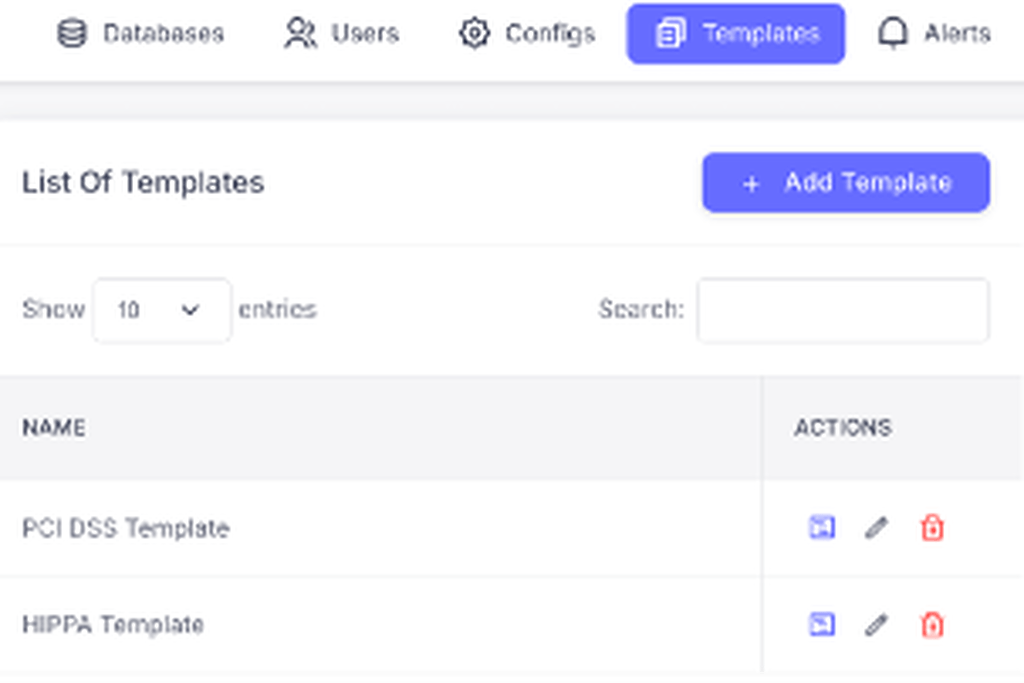
Compliance templates
Ready-made templates for GDPR, HIPAA, ISO/IEC 27001 and PCI DSS turn a standard into a concrete configuration file in minutes.
DevOps-native alerting
Findings and drift alerts flow straight into GitLab, Slack and AlertOps - no new tool for the on-call team to learn.
How database configuration security was reshaped
Configuration checks, drift detection and compliance evidence moved from manual, ad hoc effort into one continuous, automated platform.
Configuration security checks
Before
Manual, ad hoc
After
Continuous static and dynamic analysis
Every configuration is checked automatically, not just when someone remembers to look.
Configuration drift across instances
Before
Detected only after something broke
After
Flagged in real time, per instance
Unsynced changes are caught before they cause an incident.
Compliance evidence
Before
Assembled by hand, per audit
After
Generated from templates and continuous checks
GDPR, HIPAA, ISO/IEC 27001 and PCI DSS evidence is ready on demand.
Release process
Before
≈ 16 hours per monitored release
After
≈ 12 hours per monitored release
Configuration issues surface before release, not during it.
Faster, safer database releases, with compliance evidence on demand
≈ 96% detection rate on simulated attacks
brute-force authentication attempts caught during dynamic-analysis testing
≈ 25% less DevOps time per monitored database release
confirmed by the client's DevOps department against their own time-tracking data
50,000 – 199,999 €
فترة الاسترداد
Confirmed directly by the client's DevOps and security teams during the evaluation period
الطريقة
Comparison of monitored release time and incident detection before vs. after, measured against the client's own time-tracking and alerting data
درجة الثقة
High - directly measured during a live production evaluation, reviewed by the client's internal audit team
Client identity is confidential; the figures above come from the evaluation period documented in the accompanying academic research.
Real findings, on a live production database estate
OptiLink ran in the client's production environment, not just a lab. The figures below are from the evaluation period documented in the accompanying academic research paper.
Configuration files reviewed clean on first pass
قبل
N/A
بعد
68 of 80 (85%)
Evaluation period
Brute-force authentication attempts detected
قبل
0%
بعد
48 of 50 (96%)
Simulated attack testing
Alert accuracy
قبل
N/A
بعد
95% relevant, 5% false-positive
Evaluation period
Time to release a monitored database configuration change
قبل
≈ 16 hours
بعد
≈ 12 hours
Per release