


Scalable AI Solutions Guide for Enterprise Success

Leading a digital transformation often means tackling complex decisions about scaling artificial intelligence across your American or Canadian enterprise. Achieving operational efficiency with AI is about more than technology—it requires a clear vision, cross-functional collaboration, and a deep understanding of readiness factors like governance, skill gaps, and infrastructure. This guide distills multidimensional AI readiness strategies and practical architecture principles to help you design, deploy, and optimize intelligent systems that deliver measurable ROI.
Table of Contents
Quick Summary
| Key Insight | Explanation |
| 1. Assess AI readiness thoroughly | Conduct a comprehensive evaluation of technological and cultural factors to identify strengths and gaps for AI integration. |
| 2. Design adaptable AI architecture | Build a flexible framework that supports current and future AI initiatives while optimizing for performance and scalability. |
| 3. Focus on effective model integration | Develop AI models with robust governance and ethical frameworks, ensuring alignment with organizational goals and performance metrics. |
| 4. Prioritize secure large-scale implementation | Implement strong security measures and ethical guidelines to protect data and ensure compliance while deploying AI systems across the enterprise. |
| 5. Establish continuous performance monitoring | Create automated systems for real-time insights, allowing for iterative improvements and adaptations to meet evolving business needs. |
Step 1: Assess business needs and AI readiness
Assessing your enterprise’s AI readiness is a strategic process that determines your technological preparedness for artificial intelligence integration. This critical evaluation helps you understand your current capabilities, potential gaps, and the roadmap for successful AI adoption.
Begin by conducting a comprehensive organizational audit focusing on key dimensions. Multidimensional readiness factors include technological infrastructure, human capital, organizational culture, and governance frameworks. Create an assessment checklist that covers the following crucial elements:
-
Technological Infrastructure
-
Current hardware capabilities
-
Data management systems
-
Network and computational resources
-
Software integration potential
-
-
Human Capital Evaluation
-
Existing technical skills
-
AI and machine learning knowledge
-
Willingness to learn and adapt
-
Training requirements
-
-
Organizational Culture
-
Leadership’s technology vision
-
Openness to digital transformation
-
Change management processes
-
Innovation receptivity
-
The key is understanding not just technical readiness, but also your organization’s cultural and strategic alignment with AI technologies. Strategic AI adoption challenges often emerge from skill shortages, cultural resistance, and governance issues.
Successful AI integration requires a holistic approach that balances technological capability with organizational adaptability.
Strategic recommendations include developing a phased implementation strategy, investing in continuous learning programs, and creating cross-functional AI task forces to drive adoption.
Pro tip: Conduct an initial pilot project with a low-risk, high-visibility use case to demonstrate AI’s value and build organizational confidence.
Here’s a comparison of common AI implementation challenges and their solutions:
| Challenge | Example Scenario | Recommended Solution |
| Skill shortages | Lack of data scientists | Upskill through training |
| Cultural resistance | Staff hesitant to adopt AI | Foster digital education |
| Governance gaps | Unclear data policies | Establish clear frameworks |
| Integration complexity | Legacy system incompatibility | Use modular architecture |
| Security concerns | Exposure to cyber threats | Implement access controls |
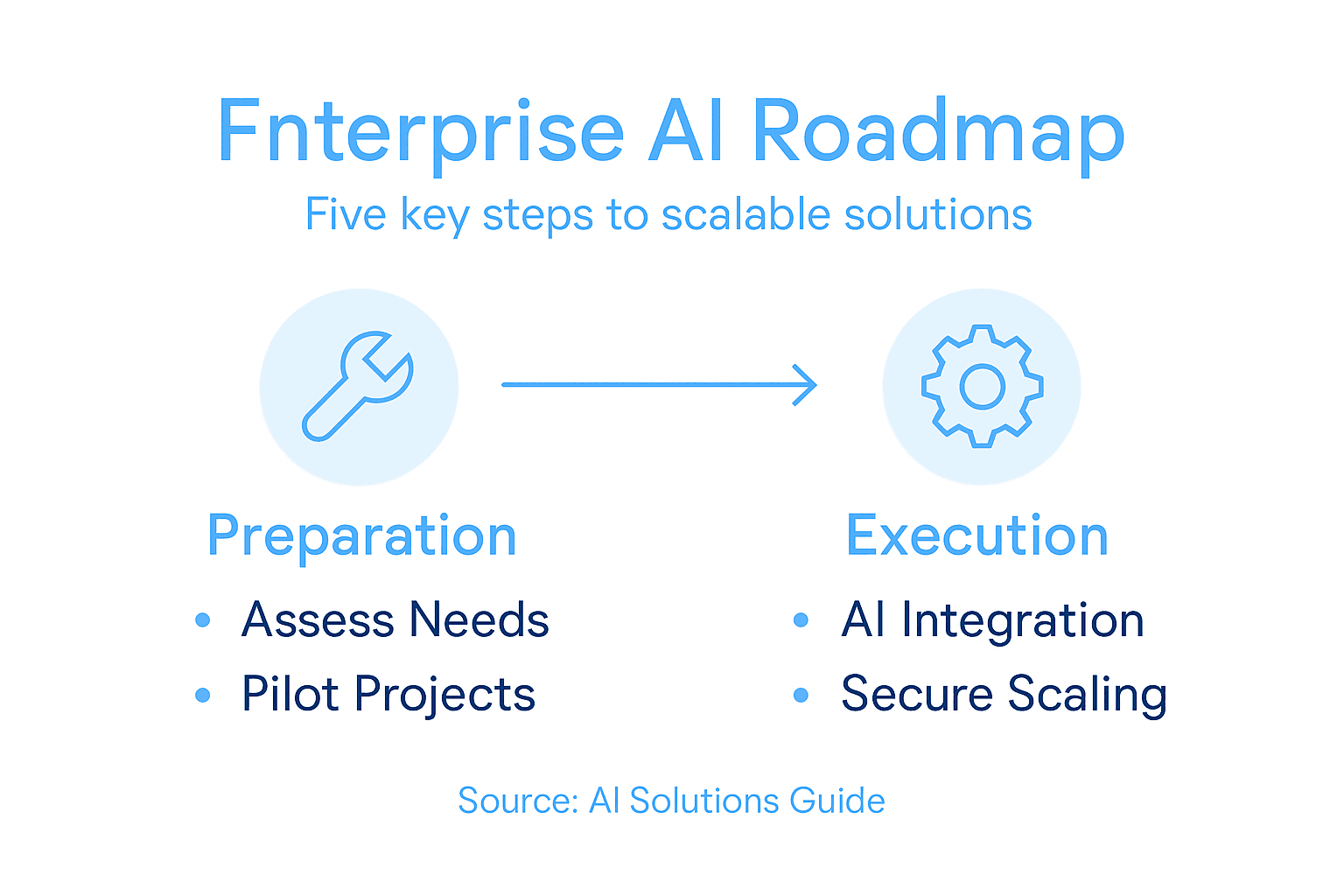
Step 2: Design scalable AI architecture
Designing a scalable AI architecture is a critical process that determines your enterprise’s ability to adapt and grow with emerging technological demands. This step involves creating a flexible, robust framework that can support complex AI initiatives while maintaining performance and efficiency.
Architectural design principles emphasize the importance of building modular, adaptable infrastructure. Key components of a scalable AI architecture include:
-
Infrastructure Components
-
Containerization technologies
-
Microservices architecture
-
Cloud-native design principles
-
Kubernetes orchestration
-
-
Scalability Considerations
-
Horizontal and vertical scaling capabilities
-
Distributed computing resources
-
Dynamic resource allocation
-
Performance monitoring systems
-
-
Integration Strategies
-
API-driven design
-
Modular software components
-
Interoperability frameworks
-
Flexible data pipeline architectures
-
Data-driven design techniques enable organizations to balance computational precision with creative innovation. The goal is to develop an architecture that not only meets current technological requirements but also anticipates future computational needs.
Effective AI architecture is not about building the most complex system, but creating the most adaptable and intelligent infrastructure.
Strategic implementation requires a holistic approach that considers technological capabilities, organizational culture, and future scalability potential.
Pro tip: Implement a pilot project with a small, manageable AI workload to test and validate your architectural design before full-scale deployment.
Step 3: Develop and integrate AI models
Developing and integrating AI models requires a strategic approach that balances technical precision with organizational goals. This critical phase transforms your AI vision into actionable, intelligent systems that can drive significant business value and operational efficiency.
AI model integration strategies emphasize the importance of creating interdisciplinary, adaptable frameworks. Your development process should focus on several key dimensions:
-
Model Development Phases
-
Data collection and preprocessing
-
Feature engineering
-
Algorithm selection
-
Training and validation
-
Performance optimization
-
-
Integration Considerations
-
Compatibility with existing systems
-
Scalability requirements
-
Performance benchmarking
-
Continuous learning mechanisms
-
-
Governance and Ethical Frameworks
-
Bias detection protocols
-
Privacy protection strategies
-
Transparency documentation
-
Accountability mechanisms
-
Institutional AI deployment approaches highlight the critical need for comprehensive governance and responsible implementation. Successful model integration requires more than technical expertise - it demands a holistic understanding of organizational dynamics and potential impact.
Effective AI model development is not just about algorithmic sophistication, but about creating intelligent systems that align with your strategic objectives.
Strategic implementation involves continuous monitoring, iterative refinement, and maintaining flexibility to adapt to evolving technological landscapes.

Pro tip: Implement robust testing environments that simulate real-world scenarios to validate your AI models’ performance and reliability before full deployment.
Step 4: Implement AI at scale securely
Implementing AI at scale requires a strategic, comprehensive approach that balances technological innovation with robust security and ethical considerations. This critical phase transforms your AI potential into enterprise-wide capabilities while maintaining the highest standards of data protection and organizational integrity.
Responsible strategic leadership demands careful alignment of AI goals with your organization’s mission and values. Your implementation strategy should encompass multiple critical dimensions:
-
Security Infrastructure
-
End-to-end encryption protocols
-
Multi-factor authentication
-
Access control frameworks
-
Network segmentation
-
Continuous threat monitoring
-
-
Governance Mechanisms
-
Cross-functional AI oversight committees
-
Ethical usage guidelines
-
Bias detection and mitigation strategies
-
Compliance documentation
-
Regular audit procedures
-
-
Scalability Considerations
-
Modular architectural design
-
Flexible resource allocation
-
Performance monitoring systems
-
Adaptive learning capabilities
-
Seamless integration pathways
-
AI implementation strategies emphasize the critical importance of comprehensive training and clear operational policies. Successful deployment requires more than technological prowess - it demands a holistic approach that prioritizes human understanding and organizational readiness.
Secure AI implementation is not about restricting technology, but about creating intelligent systems that are trustworthy, transparent, and aligned with your strategic objectives.
Strategic implementation involves creating adaptive frameworks that can evolve with technological advancements while maintaining rigorous security standards.
Pro tip: Develop a phased rollout strategy that allows for continuous feedback, incremental learning, and rapid adjustment to emerging security challenges.
Step 5: Monitor, test, and optimize performance
Monitoring, testing, and optimizing AI performance is a dynamic, iterative process that ensures your enterprise’s artificial intelligence systems continue to deliver exceptional value and adapt to evolving business needs. This critical phase transforms initial AI implementations into intelligent, responsive solutions that drive continuous improvement.
AI performance optimization techniques enable organizations to create adaptive systems that learn and improve through continuous feedback. Your monitoring strategy should encompass multiple key performance dimensions:
-
Performance Metrics
-
Accuracy and precision rates
-
Inference speed
-
Resource utilization
-
Error rate tracking
-
Computational efficiency
-
-
Testing Frameworks
-
Comprehensive benchmark scenarios
-
Edge case validation
-
Cross-functional performance tests
-
Stress testing protocols
-
Comparative model assessments
-
-
Optimization Strategies
-
Machine learning model retraining
-
Hyperparameter tuning
-
Feature engineering refinement
-
Algorithmic complexity reduction
-
Predictive maintenance techniques
-
Technical performance monitoring reveals critical insights into AI model capabilities through rigorous evaluation and innovative reasoning paradigms. Successful optimization requires a holistic approach that balances technical metrics with strategic business objectives.
Performance optimization is not about achieving perfection, but creating adaptive systems that continuously learn and improve.
Strategic implementation involves establishing robust feedback loops, leveraging advanced analytics, and maintaining a culture of continuous learning and innovation.
Pro tip: Develop automated monitoring dashboards that provide real-time performance insights and enable rapid, data-driven decision-making.
Summary of the strategic focus for each step:
| Step | Main Goal | Success Indicator |
| Assess AI Readiness | Identify gaps and strengths | Clear AI adoption roadmap |
| Design Scalable Architecture | Enable flexible AI infrastructure | Efficient resource usage |
| Develop AI Models | Build valuable intelligent systems | Reliable model performance |
| Secure Large-Scale AI | Protect data and ensure compliance | Adherence to regulations |
| Monitor & Optimize | Continuous performance improvement | Measurable value delivered |
Accelerate Your AI Journey With Scalable Solutions Tailored for Enterprise Success
Navigating the challenges of AI readiness, scalable architecture, and secure large-scale implementation requires a trusted partner who understands the nuances of your business. This guide highlights pain points like integration complexity, skill shortages, and governance gaps that can slow down your AI transformation. At NULLBIT, we turn these challenges into opportunities by delivering custom AI solutions, including RAG architectures and cloud infrastructure optimization, designed to fit your enterprise goals and drive measurable ROI.
Experience a seamless transition from AI strategy to execution with our dedicated teams focused on building adaptable, secure, and high-performance systems that align perfectly with your unique needs. Discover how we can help you overcome barriers to adoption and create intelligent systems that empower decision-making and boost operational efficiency. Explore the possibilities at NULLBIT Digital Solutions and start shaping the future of your business today.
Looking for expert support in AI development or scalable infrastructure design
Partner with NULLBIT now to transform your enterprise AI vision into a reality with proven strategies and advanced technology. Visit NULLBIT to learn more and take the first step toward sustainable AI success.
Frequently Asked Questions
How do I assess my organization’s AI readiness?
To assess your organization’s AI readiness, perform a comprehensive audit of your technological infrastructure, human capital, and organizational culture. Create a checklist focusing on current hardware, data management systems, employee skill levels, and leadership’s technology vision. This will provide a clear roadmap for integrating AI solutions.
What are the key components of a scalable AI architecture?
A scalable AI architecture should include modular infrastructure elements like containerization, microservices, and cloud-native design principles. Focus on capabilities for horizontal and vertical scaling, dynamic resource allocation, and seamless integration with existing systems to support growth and adaptability.
What steps should I follow to develop and integrate AI models successfully?
Developing and integrating AI models involves several phases, including data collection, feature engineering, algorithm selection, and continuous learning mechanisms. Ensure that models are compatible with existing systems and focus on performance optimization to align AI capabilities with your organizational objectives.
How can I ensure the security of AI implementations at scale?
To ensure the security of AI implementations, establish end-to-end encryption, multi-factor authentication, and robust access control frameworks. Incorporate regular audits and ethical guidelines to maintain high standards of data protection and compliance throughout the deployment process.
What metrics should I use to monitor and optimize AI performance?
Key performance metrics to monitor include accuracy rates, inference speed, and resource utilization. Set up comprehensive testing frameworks to track these metrics and implement optimization strategies, such as hyperparameter tuning and model retraining, to continuously enhance AI effectiveness.
What are the first steps for creating a phased rollout strategy for AI solutions?
Begin by identifying low-risk areas within your organization to pilot AI solutions, focusing on high-visibility use cases. Gather feedback and adjust the implementation process incrementally to ensure that each phase delivers measurable value and builds confidence in the AI systems.


