

Why Invest in Digital Marketing for Lasting ROI

Bold decisions set ambitious brands apart, but even the most skilled digital marketing managers see challenges with cross-channel cohesion and measurable results. The rise of digital marketing has changed how companies worldwide interact with customers, offering a direct, interactive approach that replaces one-way communication. For those aiming to maximize ROI through AI-driven solutions, this guide clarifies the fundamental concepts and proven strategies empowering stronger performance, real-time analytics, and sustainable business growth.
Table of Contents
Key Takeaways
| Point | Details |
| Digital Marketing Transformations | Digital marketing shifts from traditional to interactive, measurable engagement, leveraging various online channels for effective audience reach. |
| AI Integration | Artificial Intelligence enhances digital marketing through personalized content, predictive analytics, and automated campaign optimization. |
| Comprehensive Analytics | Utilizing advanced analytics allows businesses to evaluate marketing effectiveness, focusing on metrics like customer acquisition cost and engagement rates. |
| Holistic Strategies | A balanced approach that integrates digital and traditional marketing methods maximizes audience engagement and brand visibility. |
Digital Marketing Defined and Core Concepts
Digital marketing represents a transformative approach to connecting businesses with customers through electronic channels and internet technologies. Digital marketing strategies enable organizations to reach audiences across multiple platforms, moving far beyond traditional one-way communication methods.
At its core, digital marketing encompasses a wide range of online promotional techniques designed to engage potential customers through digital devices and internet platforms. These strategies leverage various channels to create targeted, measurable interactions:
-
Websites and search engine optimization
-
Social media marketing
-
Email communication campaigns
-
Content marketing
-
Video and multimedia advertising
-
Pay-per-click advertising
Unlike traditional marketing, digital approaches provide real-time analytics and precise targeting capabilities. Businesses can now track user engagement, measure campaign performance, and adjust strategies instantaneously. This data-driven approach allows for unprecedented precision in understanding and reaching specific audience segments.
Digital marketing transforms how businesses communicate, turning passive advertising into interactive, measurable customer experiences.
Successful digital marketing requires understanding multiple interconnected technologies and platforms. Organizations must develop comprehensive strategies that integrate various digital touchpoints, creating cohesive brand experiences across different channels.
Here’s a quick overview of how digital marketing channels impact business growth:
| Channel | Engagement Approach | Business Impact |
| SEO | Organic search optimization | Increases website visibility |
| Social Media | Platform-based audience interaction | Builds brand community |
| Content Marketing | Informative article creation | Educates and retains customers |
| Paid Ads | Targeted promotions | Drives immediate leads |
| Personalized outreach | Fosters customer loyalty |
Pro tip: Start by mapping your customer’s digital journey and identifying which online channels they most frequently use to optimize your marketing approach.
Types of Digital Marketing and Key Advantages
Digital marketing has evolved into a sophisticated ecosystem of targeted communication strategies, offering businesses unprecedented opportunities to connect with potential customers. Digital marketing techniques encompass a diverse range of online approaches designed to maximize brand visibility and engagement.
The primary types of digital marketing strategies include:
-
Search Engine Optimization (SEO): Improving organic website visibility
-
Pay-Per-Click (PPC) Advertising: Targeted paid digital advertisements
-
Social Media Marketing: Engaging audiences through platforms like Facebook, Instagram, and LinkedIn
-
Content Marketing: Creating valuable, relevant content to attract and retain customers
-
Email Marketing: Direct communication with potential and existing customers
-
Affiliate Marketing: Partnering with external content creators to promote products
Each digital marketing approach offers unique advantages that traditional marketing channels cannot match. Businesses can now track real-time performance, adjust strategies instantly, and reach highly specific audience segments with unprecedented precision. Digital marketing strategies provide detailed analytics that enable organizations to understand customer behavior and optimize their marketing investments.
Modern digital marketing transforms business communication, turning passive advertising into interactive, data-driven customer experiences.
Successful digital marketing requires a holistic approach that integrates multiple channels and leverages technological capabilities. Companies must develop comprehensive strategies that align with their specific business objectives and target audience characteristics.
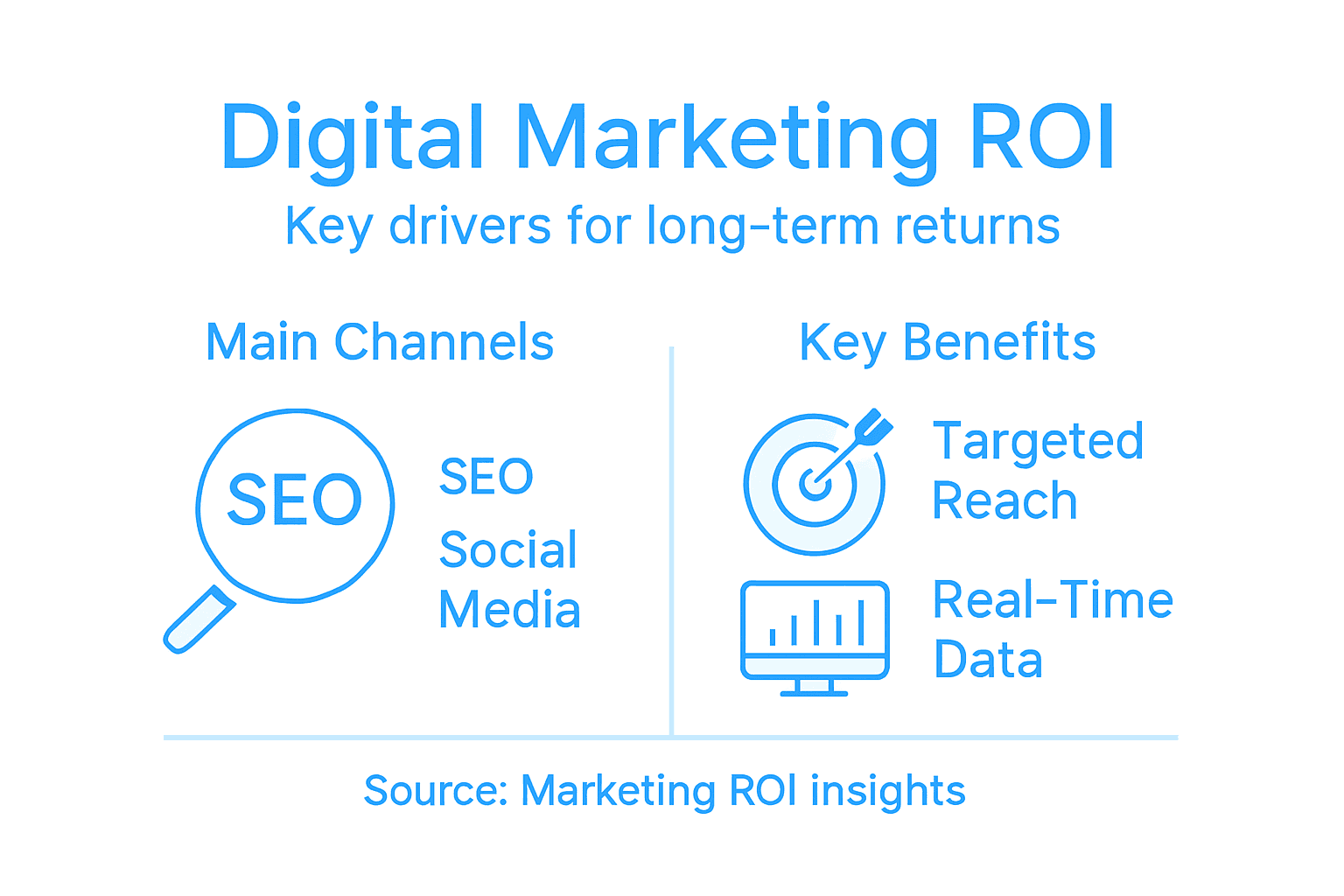
Pro tip: Create a integrated digital marketing strategy that combines multiple channels for maximum reach and engagement.
AI-Driven Solutions and Automation Trends
Artificial Intelligence is rapidly revolutionizing digital marketing by enabling unprecedented levels of personalization and operational efficiency. AI-powered marketing capabilities are transforming how businesses understand, engage, and convert potential customers through intelligent, data-driven approaches.
The key AI-driven solutions in digital marketing include:
-
Predictive Analytics: Forecasting customer behavior and market trends
-
Personalized Content Generation: Creating tailored marketing materials
-
Customer Segmentation: Identifying and targeting specific audience groups
-
Automated Campaign Optimization: Real-time performance adjustments
-
Chatbot and Virtual Assistant Technologies: Enhanced customer interaction
-
Sentiment Analysis: Understanding customer emotions and reactions
Advanced AI technologies are enabling marketers to move beyond traditional segmentation, creating hyper-personalized experiences that adapt dynamically to individual customer preferences. These intelligent systems can process vast amounts of data, identifying subtle patterns and insights that human analysts might overlook.
AI transforms marketing from a reactive discipline to a proactive, predictive strategic function.
Successful AI integration requires a balanced approach that combines technological sophistication with human creativity. Marketing teams must develop skills to interpret and leverage AI-generated insights, ensuring that machine intelligence complements rather than replaces human strategic thinking.
Pro tip: Invest in continuous AI training for your marketing team to effectively interpret and implement machine-generated insights.
Measuring Success and ROI With Analytics
Digital marketing analytics provide businesses with powerful insights into campaign performance and financial effectiveness. Measuring marketing effectiveness requires a strategic approach that goes beyond simple numerical tracking, focusing on comprehensive performance evaluation across multiple dimensions.
Key performance metrics for digital marketing ROI include:
-
Conversion Rates: Percentage of potential customers taking desired actions
-
Customer Acquisition Cost (CAC): Total expenses required to acquire a new customer
-
Return on Advertising Spend (ROAS): Revenue generated per marketing dollar invested
-
Customer Lifetime Value (CLV): Total projected revenue from a customer relationship
-
Engagement Metrics: Time spent, interactions, and content consumption
-
Lead Quality Score: Potential of generated leads to convert into paying customers
Digital marketing ROI evaluation involves sophisticated tracking tools and advanced analytics platforms that enable precise measurement of marketing performance. These technologies help organizations understand the direct correlation between marketing investments and business outcomes.
Effective analytics transform marketing from a cost center to a strategic revenue generator.
Successful ROI measurement requires continuous monitoring, data-driven insights, and flexible strategy adjustments. Marketing teams must develop robust analytical capabilities that enable them to interpret complex performance data and make informed strategic decisions.

Pro tip: Implement a comprehensive analytics dashboard that integrates multiple performance metrics for holistic marketing performance evaluation.
Risks, Costs, and Common Investment Pitfalls
Digital marketing investments require strategic planning and comprehensive risk assessment to ensure sustainable growth and financial effectiveness. Digital marketing adoption risks represent complex challenges that demand proactive management and strategic foresight.
Common investment risks and potential pitfalls include:
-
Budget Misallocation: Inefficient spending on underperforming channels
-
Technology Integration Challenges: Compatibility issues with existing systems
-
Skill Gap: Insufficient internal expertise to leverage digital tools
-
Rapid Technology Obsolescence: Constant need for infrastructure updates
-
Performance Uncertainty: Unpredictable marketing campaign outcomes
-
Data Privacy Compliance: Navigating complex regulatory requirements
Digital marketing investment strategies must balance innovation adoption with rigorous cost control mechanisms. Organizations need robust risk management frameworks that enable continuous performance evaluation and strategic adjustments.
Successful digital marketing investments require adaptability, continuous learning, and data-driven decision making.
Minimizing investment risks demands a holistic approach that integrates technological capabilities, organizational culture, and strategic alignment. Companies must develop flexible frameworks that accommodate rapid digital transformation while maintaining financial discipline and operational efficiency.
Pro tip: Conduct quarterly comprehensive audits of digital marketing investments to identify potential risks and optimization opportunities.
Comparing Digital and Traditional Marketing Strategies
Marketing strategies have undergone a profound transformation with the emergence of digital platforms. Marketing strategy comparison reveals significant differences in approach, effectiveness, and audience engagement between traditional and digital methods.
Key differences between traditional and digital marketing include:
-
Communication Style
-
Traditional: One-way, static messaging
-
Digital: Interactive, real-time engagement
-
-
Cost Effectiveness
-
Traditional: High production and distribution expenses
-
Digital: Lower cost, higher scalability
-
-
Audience Targeting
-
Traditional: Broad, demographic-based reach
-
Digital: Precise, behavior-driven targeting
-
-
Performance Measurement
-
Traditional: Limited tracking capabilities
-
Digital: Comprehensive, granular analytics
-
-
Global Reach
-
Traditional: Geographic limitations
-
Digital: Instant international accessibility
-
-
Content Flexibility
-
Traditional: Fixed, unchangeable content
-
Digital: Dynamic, instantly updatable
-
Brand-customer relationship strategies demonstrate that integrating digital and traditional approaches can create powerful omnichannel marketing experiences. Successful organizations now blend multiple communication channels to maximize customer engagement and brand visibility.
See how digital and traditional marketing strategies differ across critical business aspects:
| Aspect | Digital Marketing | Traditional Marketing |
| Audience Reach | Global, scalable | Local, geographically limited |
| Adjustability | Instant, data-driven | Fixed, slow to change |
| Interaction | Two-way, real-time | One-way, delayed response |
| Cost Structure | Flexible, lower entry | High, upfront investments |
Modern marketing demands a seamless integration of digital innovation and strategic traditional insights.
Effective marketing requires understanding the unique strengths of both digital and traditional strategies. Companies must develop hybrid approaches that leverage the precision of digital tools while maintaining the emotional connection of traditional communication methods.
Pro tip: Develop a balanced marketing strategy that combines digital precision with traditional brand storytelling techniques.
Unlock Lasting ROI with Expert Digital Marketing and AI Solutions
Investing in digital marketing offers incredible opportunities to achieve measurable results through targeted strategies, precise audience engagement, and real-time analytics. Yet many businesses face challenges like budget misallocation, technology integration hurdles, and maximizing ROI amid rapid changes. At NULLBIT, we understand these pain points and offer tailored solutions spanning AI-driven automation, custom software development, and smart digital marketing services to transform your marketing investments into sustainable growth.
Gain the advantage of cutting-edge AI-powered personalization combined with robust digital infrastructure support. Our dedicated teams deliver end-to-end project execution that improves engagement, boosts conversion rates, and ensures continuous performance measurement aligned with your unique business goals. Don’t let uncertainties hold you back from harnessing the full power of strategic digital marketing designed for lasting impact.
Ready to elevate your digital marketing ROI with expert technological innovation and data-driven strategies? Explore how NULLBIT can accelerate your digital transformation journey today at NULLBIT. Leverage our advanced AI solutions, automation capabilities, and custom software expertise to secure a competitive edge that lasts.
Frequently Asked Questions
What are the key benefits of investing in digital marketing?
Investing in digital marketing offers increased brand visibility, cost-effectiveness, precise audience targeting, and comprehensive performance tracking, enabling businesses to connect more effectively with potential customers.
How can I measure the ROI of my digital marketing efforts?
You can measure ROI by analyzing key performance metrics such as conversion rates, customer acquisition costs, return on advertising spend, and customer lifetime value, all of which provide valuable insights into the effectiveness of your campaigns.
What digital marketing strategies should I include in my investment plan?
Key digital marketing strategies to consider include search engine optimization (SEO), pay-per-click (PPC) advertising, social media marketing, content marketing, and email marketing, as these approaches engage customers across various platforms.
How does digital marketing compare to traditional marketing?
Digital marketing offers interactive engagement, greater cost efficiency, real-time performance measurement, and precise audience targeting compared to traditional marketing’s one-way communication and limited tracking capabilities.


